Salt is one of the most ancient and essential ingredients in human diets. From flavoring food to preserving meat, humans have relied on salt for thousands of years. But not all salt is created equal. In modern kitchens, you’ll find a wide range of salts — from the common table salt in shaker bottles to artisanal sea salts and Himalayan pink salt. While all salts contain sodium chloride, differences in processing, mineral content, texture, flavor, and health implications make choosing the right salt more nuanced than you might think.
In this blog, we’ll explore the key differences between high-quality salts (such as sea salt, Himalayan salt, and other gourmet salts) and regular table salt, and we’ll break down how these differences might affect your health and culinary experience.
What Is Salt, Really?
At its core, salt is a mineral composed of sodium (Na) and chloride (Cl) — hence the chemical name, sodium chloride (NaCl). Sodium is essential for maintaining fluid balance, nerve transmission, and muscle function in the body. However, too much sodium can contribute to high blood pressure and increase the risk of heart disease.
Different types of salt vary slightly in composition and how they’re processed.
Regular Table Salt: What You Need to Know
How It’s Made
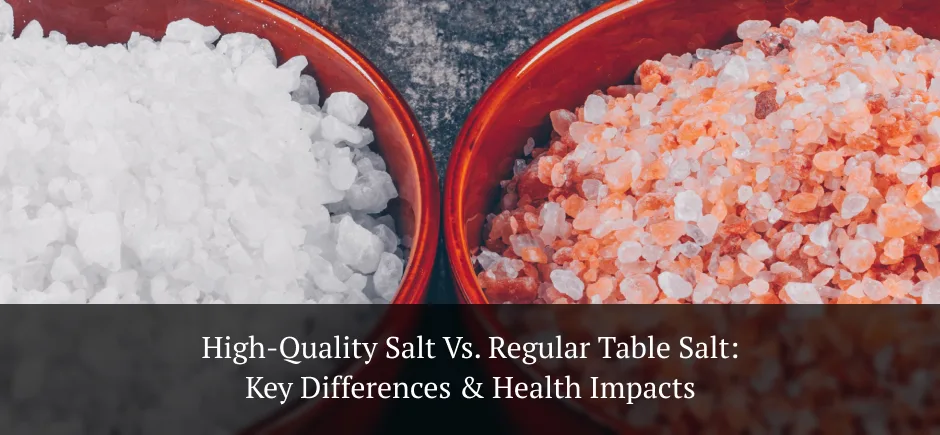
Regular table salt is highly processed. It’s typically mined from underground salt deposits and then refined to remove impurities and trace minerals. This refining process results in a very fine, uniform grain — a texture that’s ideal for shakers and baking.
Additives
To prevent clumping (especially in humid environments), most table salt is treated with anti-caking agents. Many brands are also iodized, meaning iodine has been added to help prevent iodine deficiency, which can lead to thyroid issues.
Nutrient Profile
While table salt is nearly 100% sodium chloride, it lacks the trace minerals found in less processed salts.
Pros of Table Salt
- Affordable and widely available
- Iodized varieties support thyroid health
- Fine texture is ideal for baking and seasoning
Cons of Table Salt
- Highly refined, lacking trace minerals
- Anti-caking agents may concern some consumers
- Flavor can be perceived as “flat” compared to gourmet salts
High-Quality Salt: Sea Salt, Himalayan, and Others
“High-quality salt” is a general term that includes salts like sea salt, Himalayan pink salt, Celtic sea salt, and other artisanal varieties.
Sea Salt
Sea salt is produced by evaporating seawater, leaving behind salt crystals that retain trace minerals like calcium, magnesium, and potassium. The mineral content and texture vary depending on where the sea salt was harvested.
Sea salt often has a coarser grain and more complex flavor than table salt.
Himalayan Pink Salt
Himalayan salt is mined from ancient salt deposits in the Himalayan region. Its pink color comes from iron oxide (rust) and other trace minerals.
While Himalayan salt is still mainly sodium chloride, it also contains trace elements like potassium, magnesium, and calcium — giving it a distinctive flavor and color.
Other Gourmet Salts
Artisanal salts, such as flaky finishing salts, smoked salts, and Fleur de Sel, are prized for unique textures and flavors that can elevate dishes.
Pros of High-Quality Salt
- Richer flavor and texture
- Contains trace minerals (although in small amounts)
- Less processed than table salt
- Often used as finishing salts for culinary flair
Cons of High-Quality Salt
- More expensive
- Mineral amounts are usually too small to provide significant nutritional benefits
- Coarser texture isn’t always ideal for all cooking (e.g., baking)
Key Differences at a Glance
| Feature | Regular Table Salt | High-Quality Salt |
|---|---|---|
| Processing | Highly refined | Less processed |
| Mineral content | Mostly sodium chloride | Sodium chloride + trace minerals |
| Texture | Fine and uniform | Coarse to flaky |
| Additives | Often anti-caking agents and iodine | Generally none |
| Flavor | Clean, neutral | Richer, distinct |
| Cost | Very affordable | Moderate to expensive |
| Best use | Everyday seasoning, baking | Finishing, grilling, gourmet cooking |
Health Impacts: What Science Says
Sodium and Blood Pressure
Regardless of the type, all salt contains sodium, and excessive sodium intake is linked to high blood pressure (hypertension), a risk factor for heart disease and stroke. Reducing overall sodium consumption is recommended by health organizations worldwide.
The American Heart Association recommends no more than 2,300 mg of sodium per day, with an ideal limit of 1,500 mg for most adults — especially those with high blood pressure.
While high-quality salts may contain trace minerals, the amounts are too small to make a meaningful difference in overall nutrition or health outcomes.
Trace Minerals: Real Benefit or Marketing Hype?
High-quality salts are often marketed as “healthier” because they contain trace minerals. However:
- The quantities of minerals like magnesium or potassium in sea salt or Himalayan salt are very low.
- You would need to consume large amounts of these salts to get meaningful mineral intake — which would also mean taking in too much sodium.
Therefore, while the presence of these minerals may contribute to flavor and aesthetic appeal, the actual health impact is minimal.
Iodine: A Real Health Advantage
Iodine is an essential nutrient that supports thyroid function. In many parts of the world, table salt is iodized to prevent iodine deficiency.
High-quality salts usually do not contain added iodine, so if iodine intake is a concern (e.g., in regions with low seafood consumption), table salt can be beneficial.
How to Choose the Right Salt for You
Choosing between regular table salt and high-quality salt comes down to your goals in the kitchen and your overall diet.
When Table Salt Makes Sense
- You bake often — fine grains dissolve more predictably
- You need iodine in your diet
- Cost and convenience matter
When High-Quality Salt Shines
- You want to enhance the flavor and texture of finished dishes
- You enjoy experimenting with different types of culinary salts
- You prefer less-processed ingredients
Tip: You can use table salt for everyday cooking and reserve gourmet salts for finishing touches — a pinch of flaky sea salt on roasted vegetables or a sprinkle of Himalayan salt on grilled steak can elevate flavor without overusing sodium.
Practical Tips for Using Salt Wisely
1. Taste Before You Salt
Food often needs less salt than you think. Taste as you cook and add incrementally.
2. Use Salt at Multiple Stages
Season meat before cooking, add a bit during cooking, and finish with a pinch — layering salt enhances flavor more effectively than dumping a lot at once.
3. Balance With Herbs and Acids
Salt enhances flavor best when paired with acidity (lemon juice, vinegar) and aromatics (garlic, herbs). Reducing sodium doesn’t mean sacrificing taste.
4. Check Labels
Some salts include added ingredients like anti-caking agents or flavorings — reading labels helps you know what you’re consuming.
Final Thoughts: Flavor First, Health Always
Salt is essential — both as a nutrient and a flavor amplifier. Whether you prefer the convenience of regular table salt or the nuanced taste and texture of high-quality salts, it’s important to be mindful of overall sodium intake.
High-quality salts offer culinary flair and a sensory experience, while regular table salt provides dependable performance and often valuable iodine. Neither salt is inherently “bad,” but moderation and thoughtful use are key to both better flavor and better health.
Choose the salt that fits your cooking style, enjoy the flavors it brings, and keep your sodium intake aligned with your health goals.